
Every farm, smallholder. cottager and even miner kept one or more pigs from the medieval period right up until the 1950s. The presence of the old pig sty in the yard and ‘back-yard’ testifies to that fact. Indeed pig sties have an architectural provenance all their own and so too do the troughs and swill buckets. the welfare tools and the death tools; for ultimately the death of the pig was the end result of loving care and attention. But in that death lay the ability of their carers to survive another long hard winter. “The only thing not used from a carcass was the squeak”, so the old saying goes. Unsurprisingly many artefacts relating to the rearing of these ‘swine’ have come my way as they were omnipresent seventy years ago.
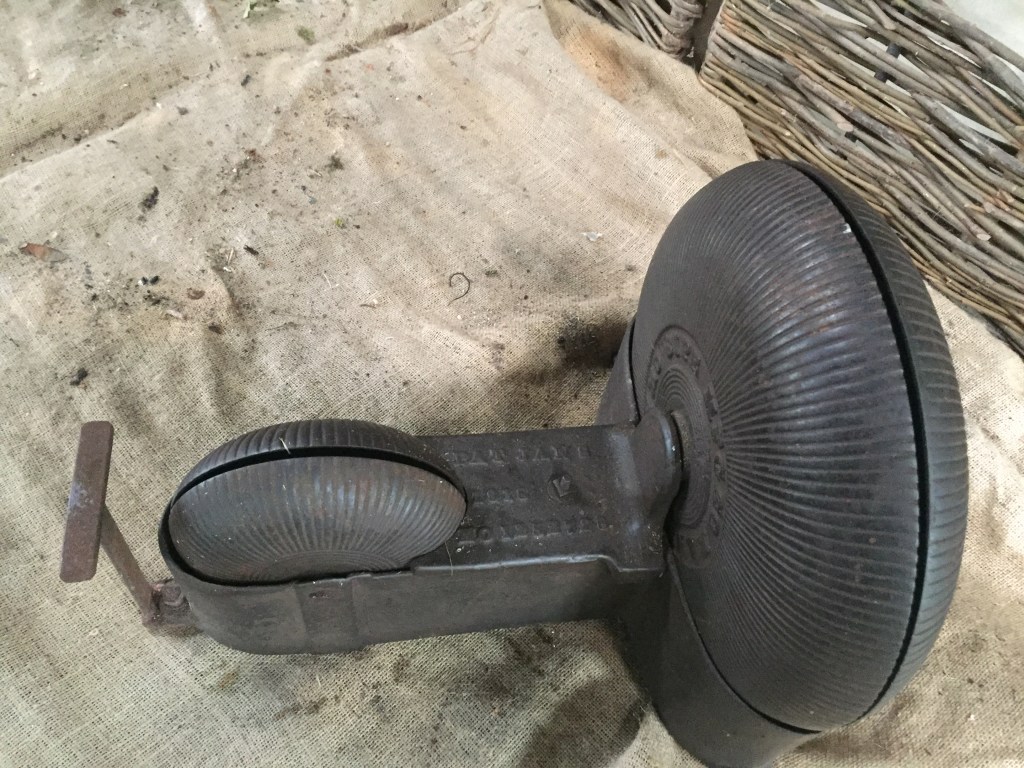
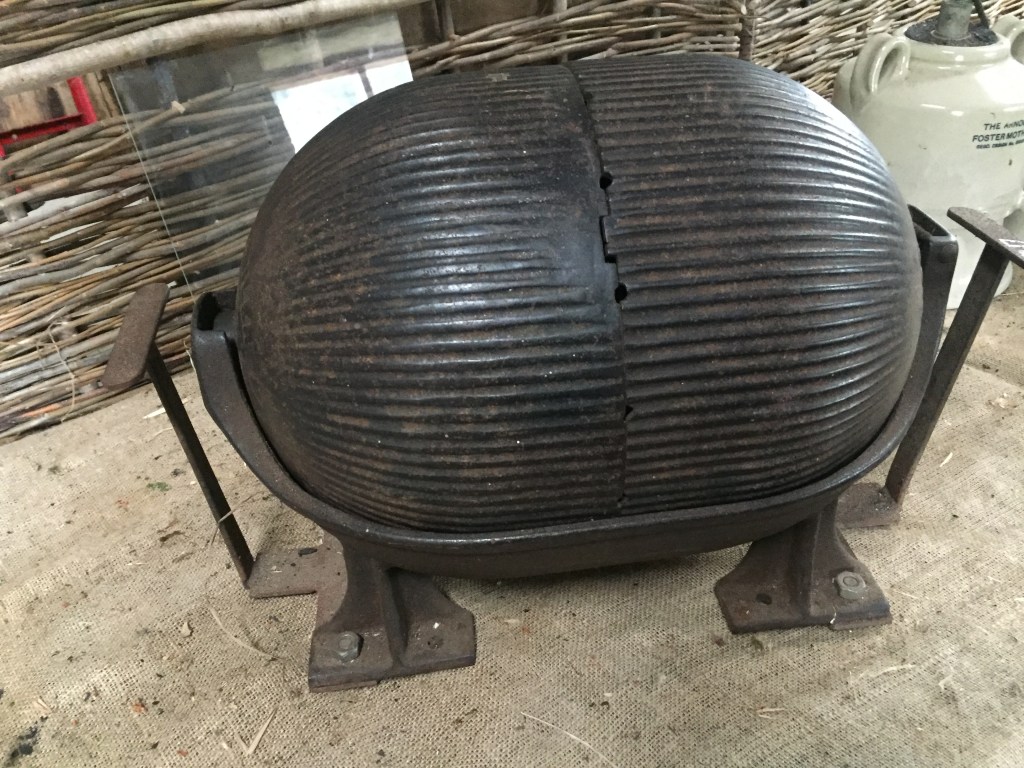
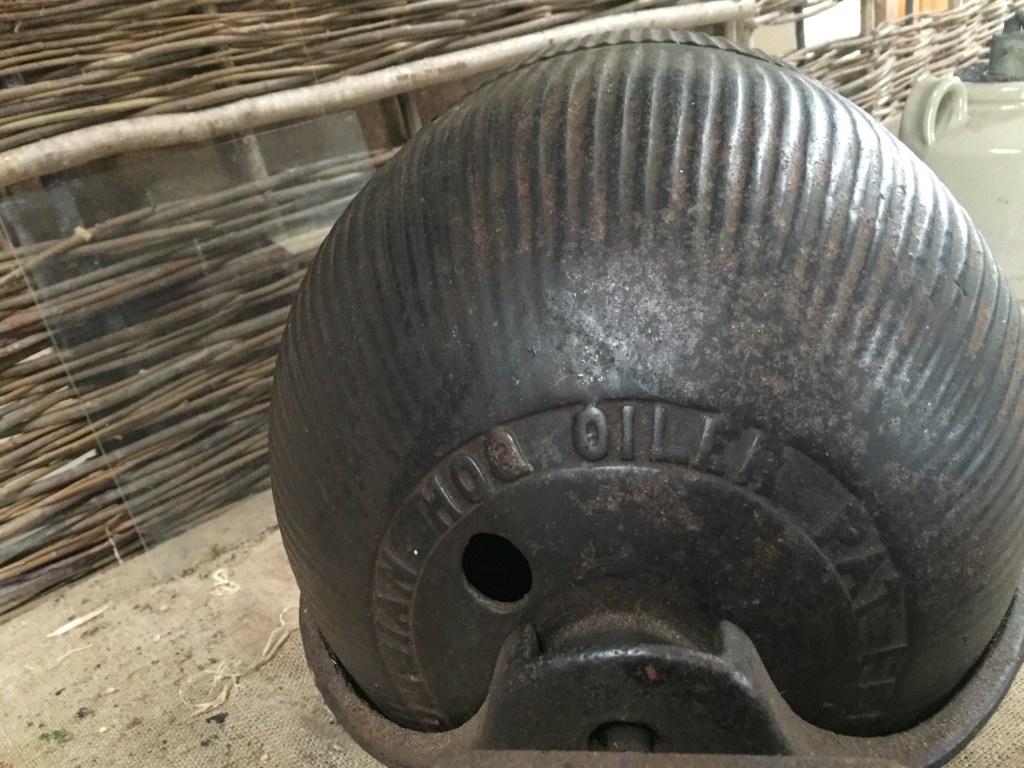
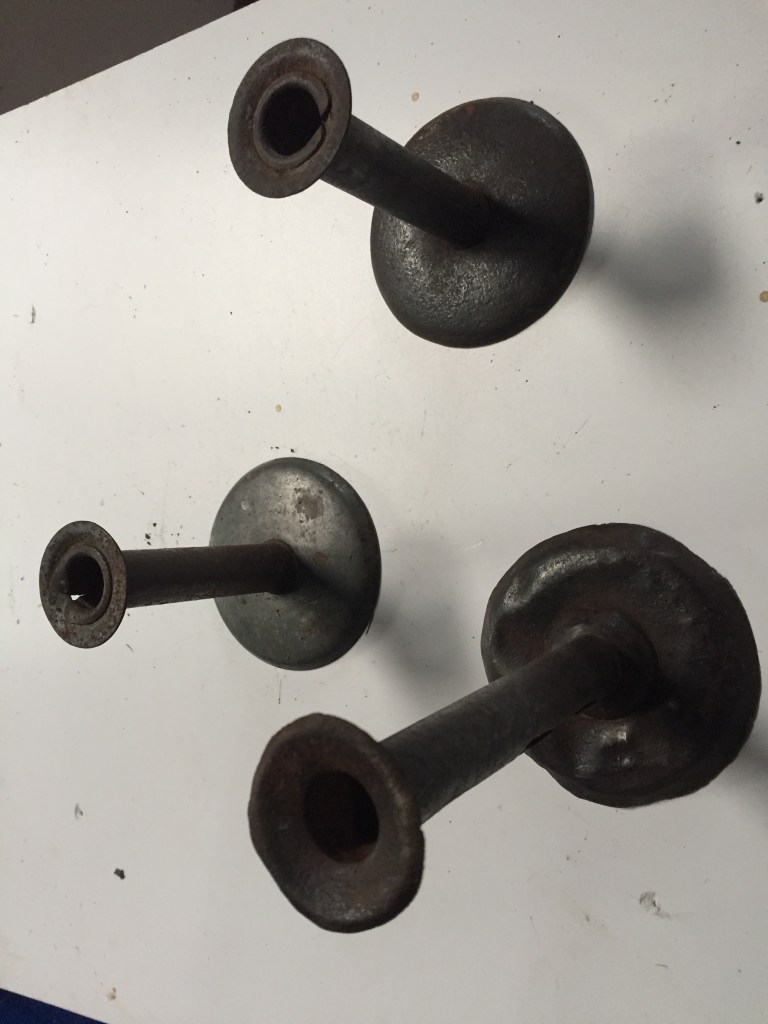
The oilers are quite a rarity, mostly I suspect, as they broke very easily (being thin cast iron). Their use seems to have been fairly common amongst smallholders and ‘backyard’ pig keepers in the industrial towns and small rural villages where the animals had little access to muddy open areas.
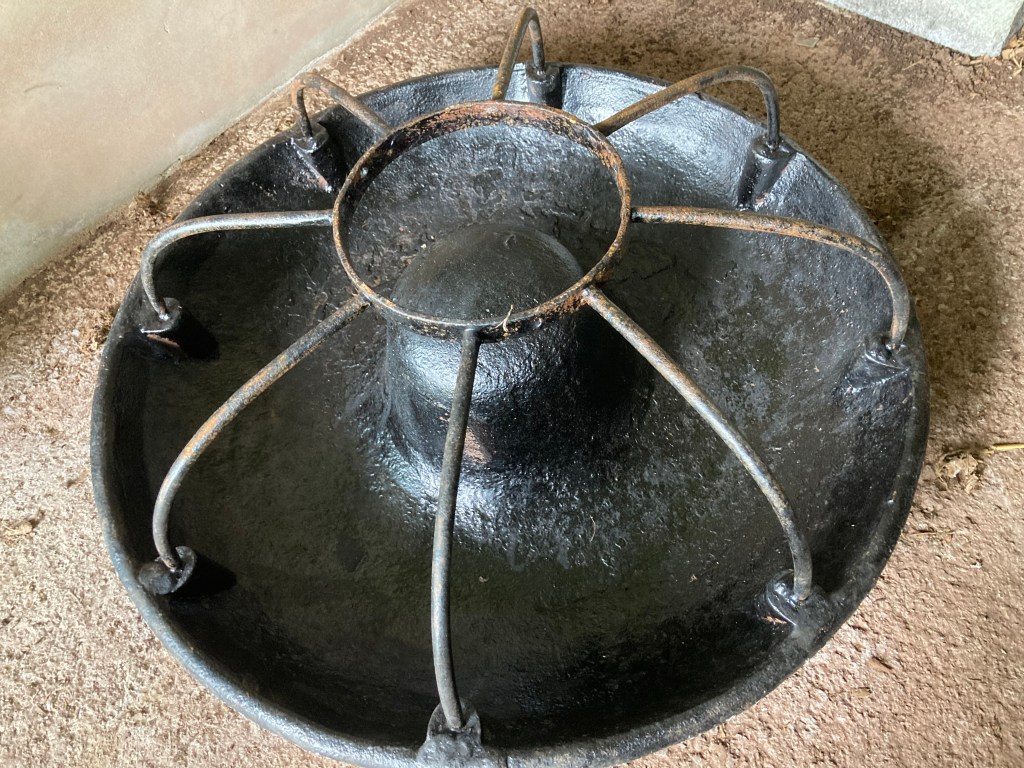
Another cast iron common item often broken and discarded, even though extremely heavy, the larger pigs could flip them over and on a stone cobbled yard so, goodbye feeder. Although today often called a ‘Mexican hat’ feeder ring and much sought after as garden ornaments (commanding silly prices) they were generally just known as a ring feeder and were mostly to accommodate a hungry hoard of piglets.
The adults normally got their food served up in the ubiquitous ‘trough’ which in the stone ‘sty’ was usually built into the corner or side wall and often an external ‘shoot’ was included. The shoot allowed the ‘slops’ to be tipped into the trough without having to enter the sty.
Many of the hand tools are associated with the processing of the animal toward the table.
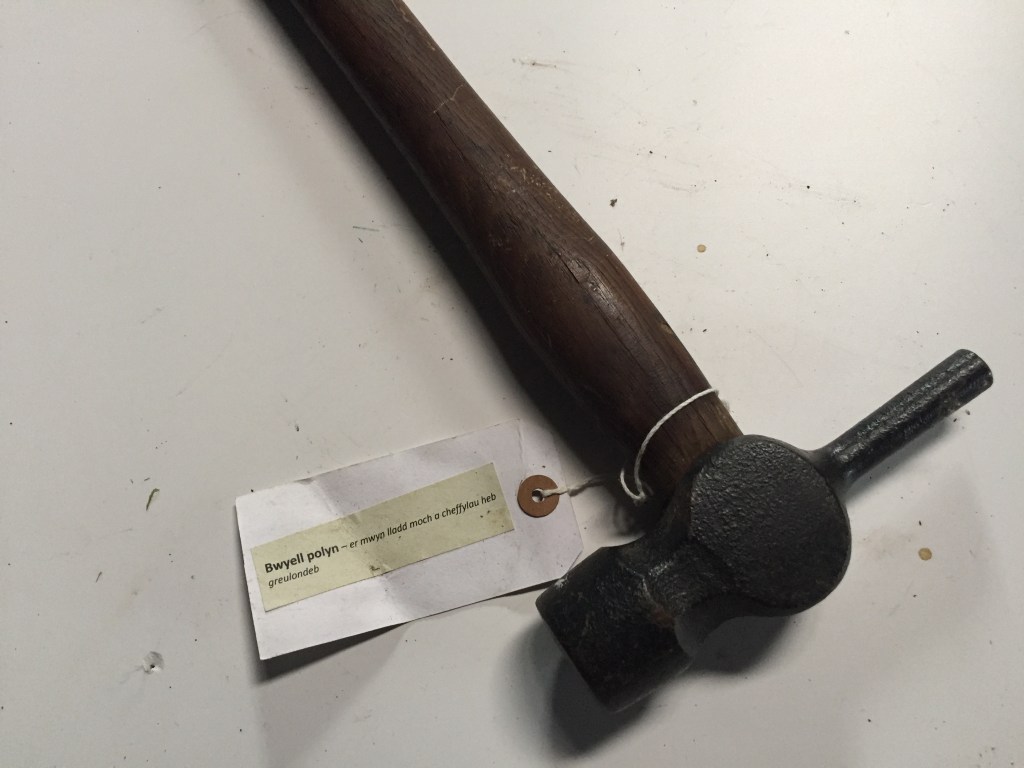
The ‘humane’ killer was introduced during the early years of the second world war. Following the introduction of rationing, the killing of a pig had to be carried out in the presence of an official, usually the local bobby or a ‘man from the ministry’. Such was the gruesome spectacle of the slitting of a pig’s throat and the subsequent long, noisy and often violent death throes the witnesses. generally unaccustomed to such spectacles, were horrified. It was deemed more humane that the animal should be knocked out (stunned) first and then a ‘pole’ driven into the skull into which a small wire was inserted (the pole is a tube at the end of which is a small hole through which the wire was inserted) into the animal’s brain, the wire was then jiggled about hence ensuring a painless quick death. Make your own judgement on that.
The ‘pole-axe’ will be illustrated and explained in the article on cattle management.
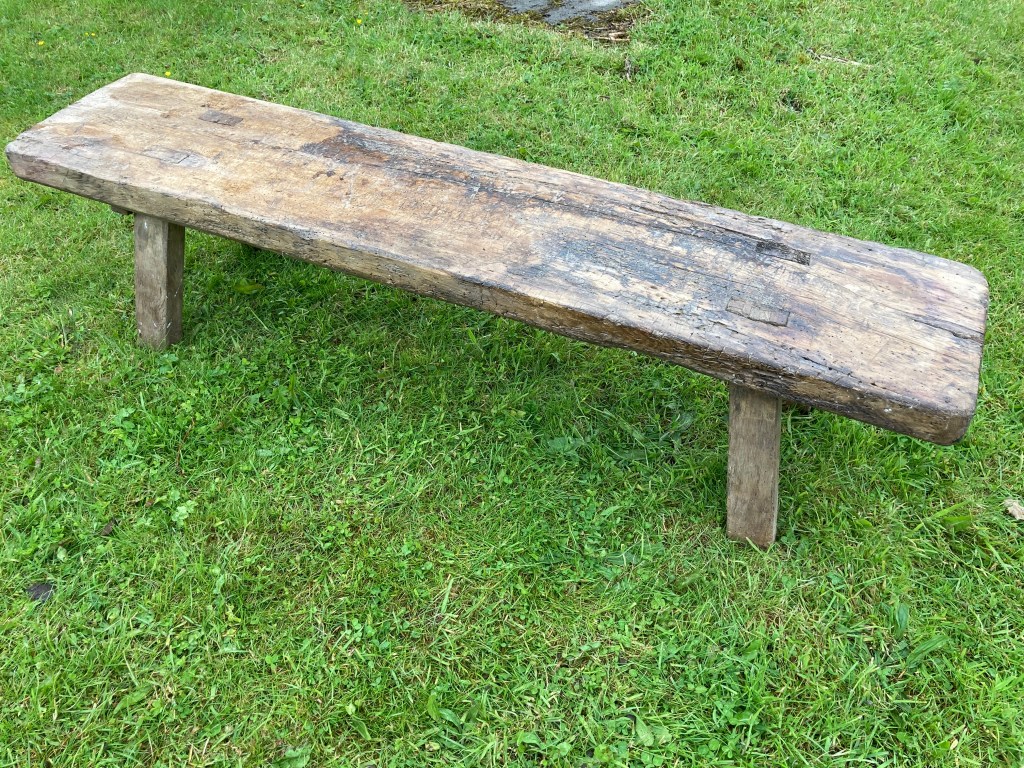
The ‘death bed’ was generally a well made oak (sometimes Elm) bench, the ‘Pig Bench’. Such items are often to be found in antiques shops and command high prices. Interestingly the purpose of the ornate bench is rarely mentioned. I had a friend who’s wife, a daughter of an upland farm, desperately wanted a nice pig bench for use as a coffee table in their rather well antiquely furnished house. I found her a super example, in elm, from an old farm not five miles from them. She loved it but alas HE loved pigs and would not countenance having such an obscenity in the house ….. The bench above came from a farm high up in the Abergwesyn valley of Breconshire.
On the day of the dastardly deed it was common for the children to be away somewhere, at school or relatives. I’ve actually known one or two old farmers who also could not be at home on that sad day. If the farmer or farmhand did not carryout the deed it was common for a peripatetic ‘pig killer’ to attend (he would ‘do’ several in the area on the same day)
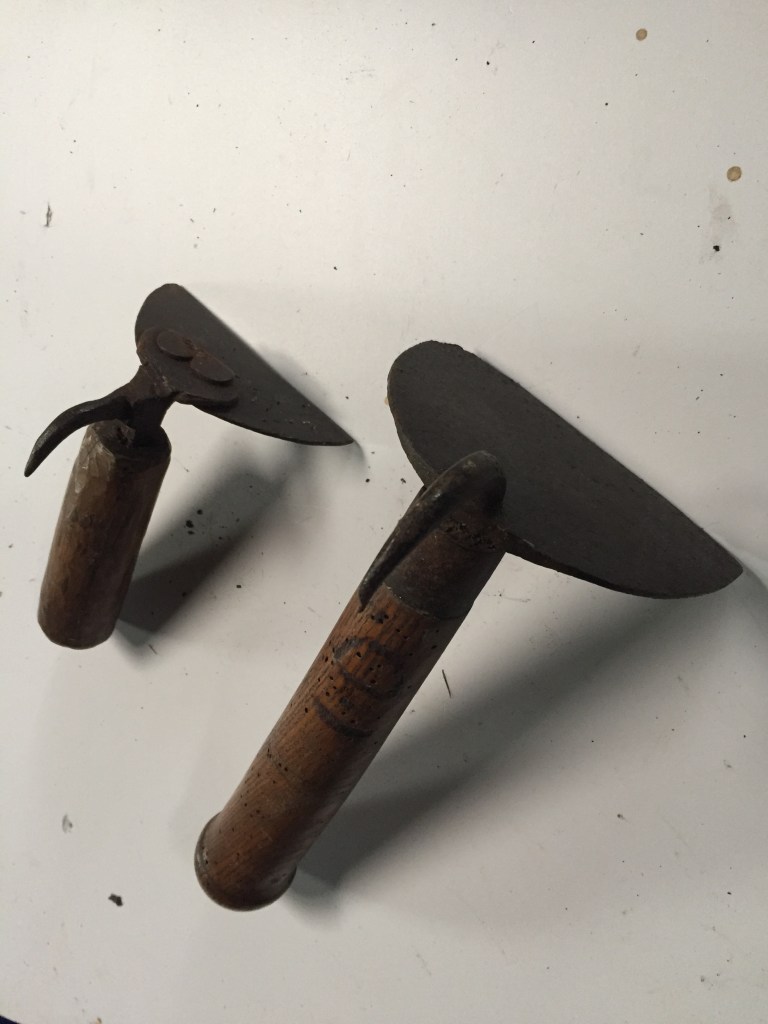
Once the killing was effected and the blood drained the carcass was scalded and de-haired. This was accomplished by hanging the carcass head down and pouring boiling water over the skin prior to shaving the hair with a scraper. (It’s interesting that the term Hog was often appended to such tools in this country even though it was the American term for pigs but given that many of the nineteenth century tools and equipment – such as the oilers above – originated there, it is perhaps not surprising.) The hanger was called a gambril and was made of ash. It came it varying lengths to accommodate all sizes of carcass.
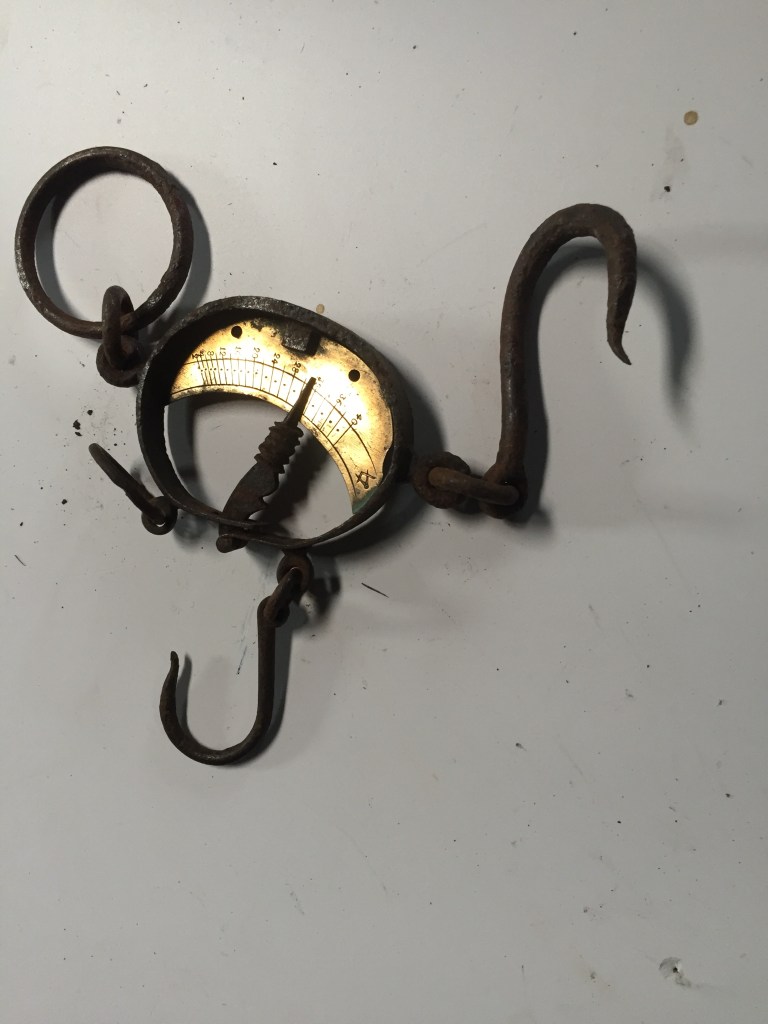
A spring balance for weighing carcasses and joints.
The scraper resembled a candle stick and indeed it acted as such as the candle was used to singe the hair. The round base had a sharp edge to scrape away the hair but somealso had a hook wit which the trotters could be pulled off.
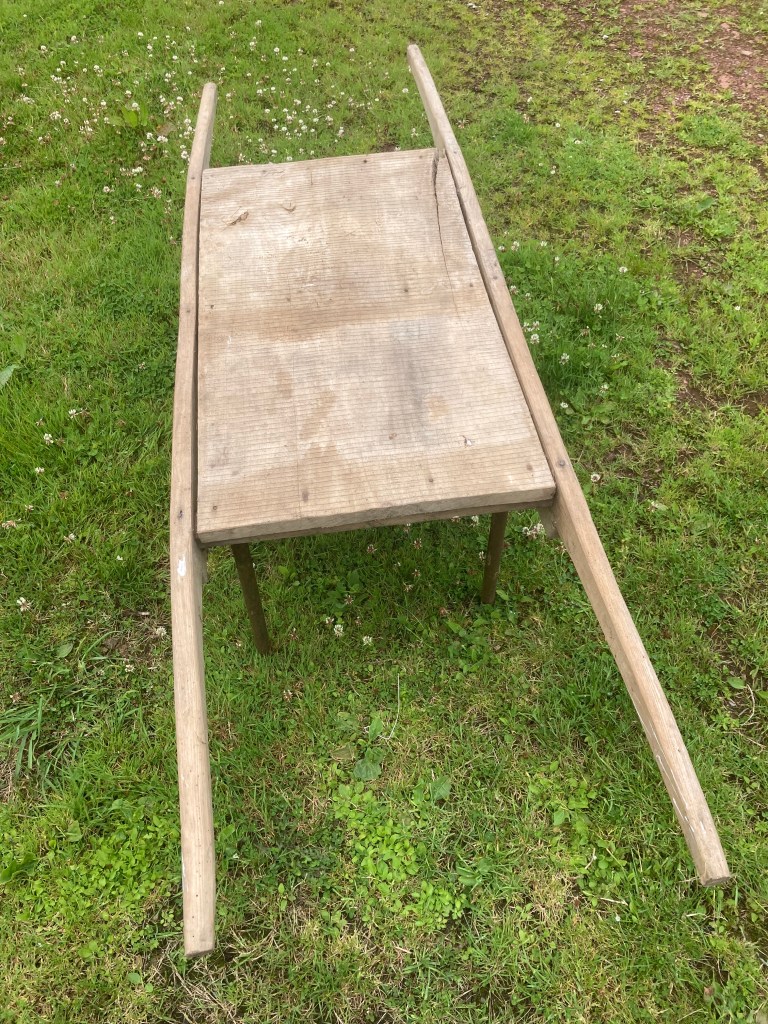
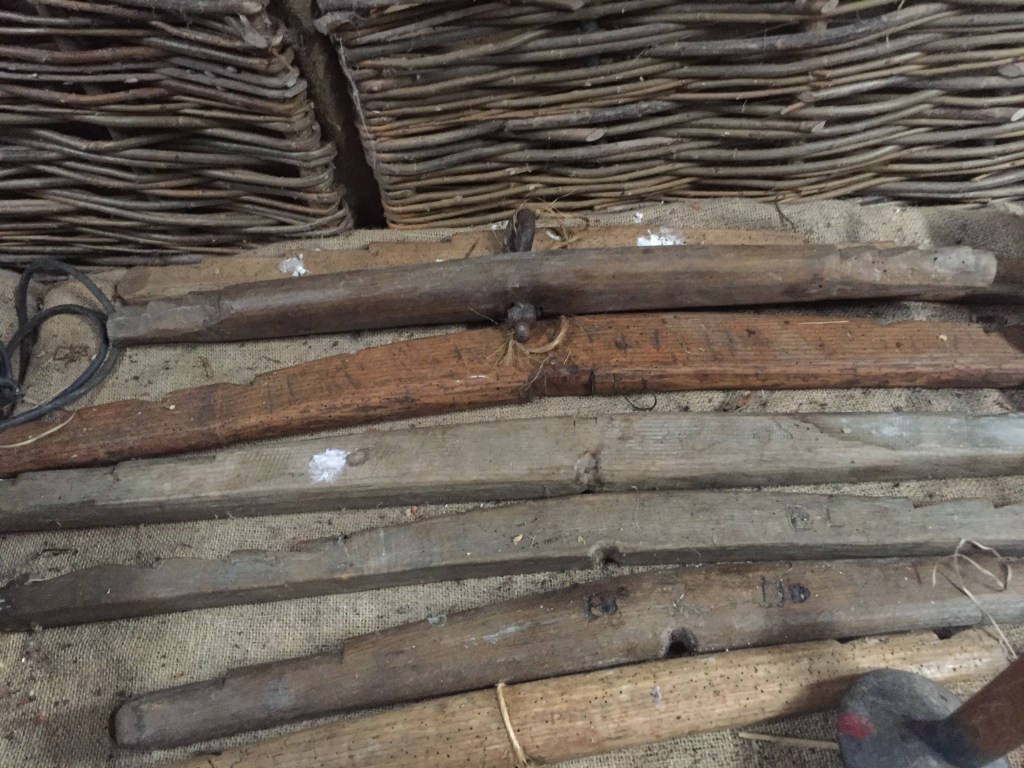
A pig carcass, no matter breed nor size, is extremely heavy and in order to carry it from the bench to the de-hairing and butchering site a stretcher was used. (note the term ‘stretcher was also used to refer to ‘gambrils and other hanging hooks which stretched out the back legs) This old stretcher is of Elm and came from the same farm as the bench featured above. Both are known to be very early C20th.
Whilst most pigs spent much of their life in a stone built sty which ensured they did ‘nowt but eat, sleep and get fat – which was the plan of course – there were other husbandry methods. ‘Pannage’ was an enshrined medieval right of turning animals onto the ‘wastes’ (what today we think of as ‘commons’) and certainly where woodlands were accessible, pigs were loosed. The acorns, crab apples, beech mast and anything else edible was devoured. Orchards were a favoured ‘turn-out’ plot but only after the fruit wanted for humans was picked and cleared.
However, the big problem with pigs is their urgent desire to stick their snouts as deep into the ground as they can – great if you’re seeking truffles but not otherwise. Indeed if a plot of fallow needed turning and manuring they were the ideal machine. Where it was not so desirable the simple prophylactic of a ring in the nose curtailed that activity. As with many ground feeders, the end of the nose, the snout, is extremely sensitive and trying to root about – for ‘rooting’ is what they do, getting at the succulent fibres of plants and pretty much clearing them from that particular patch of ground – with a metal ring secured between your nostrils is a great deterrent.
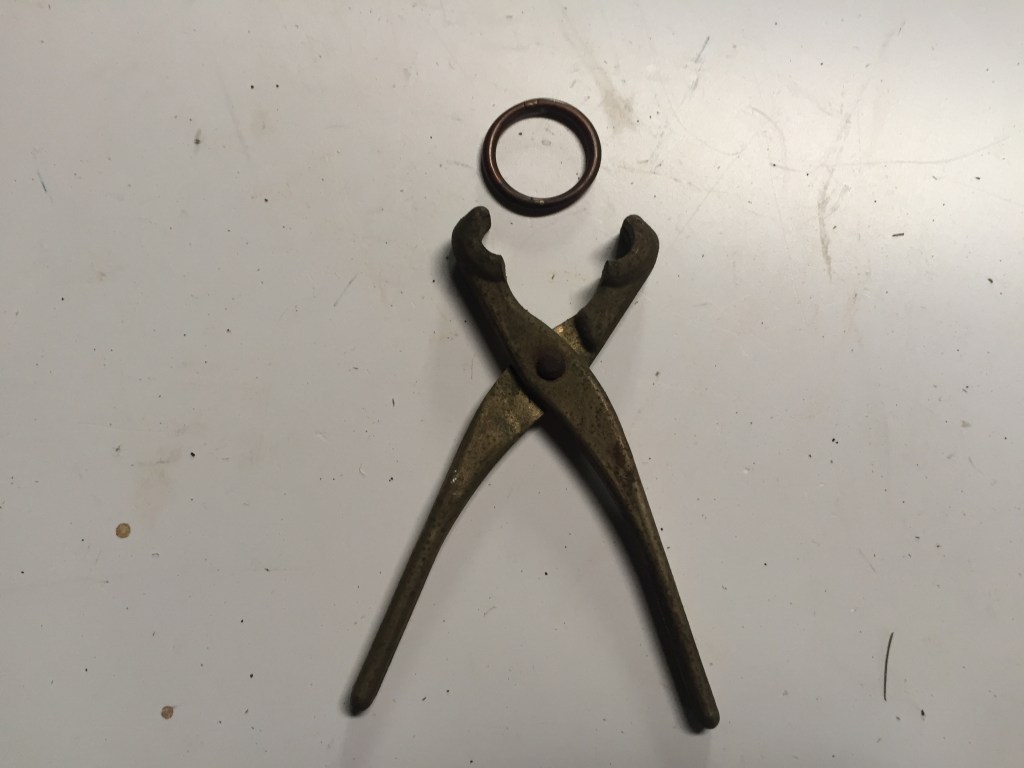
Every pig farmer had various sizes of rings, usually copper, and a set of pliers which look more like pincers, which have a groove in the curved end to enclose the ring once it had been inserted and squeezed it shut. How the ring was first inserted through the tender tissue between the nostrils I have no idea for even a porker would be a handful to hold steady !
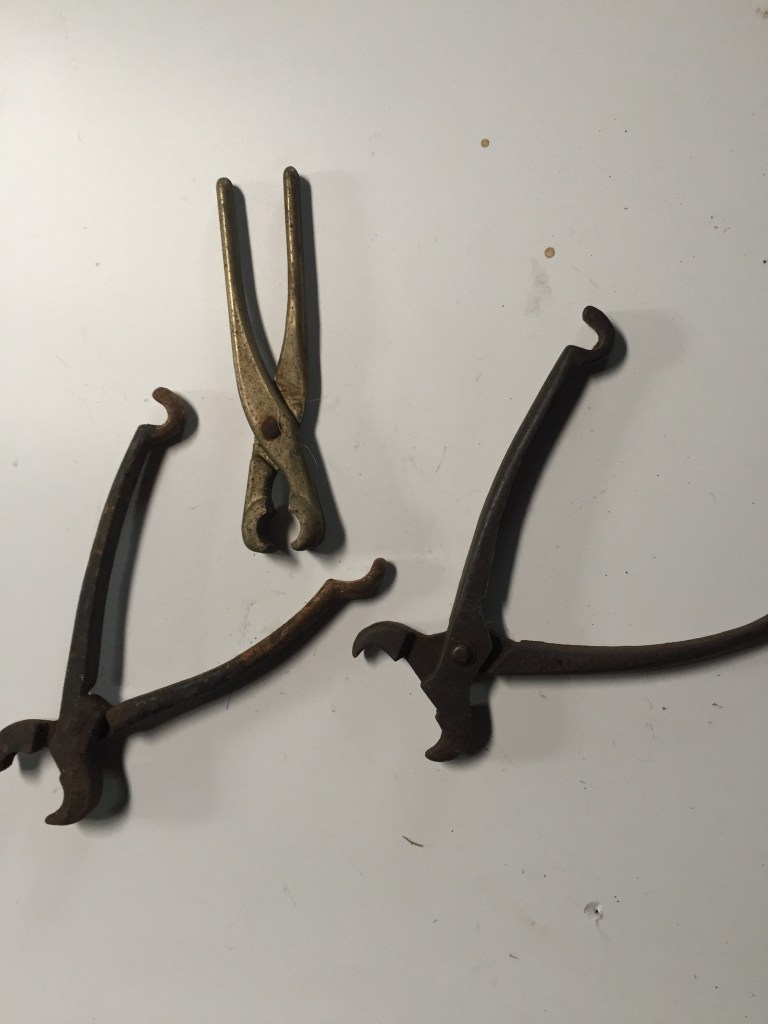
3 of the dozen or so ringing pliers in the collection.
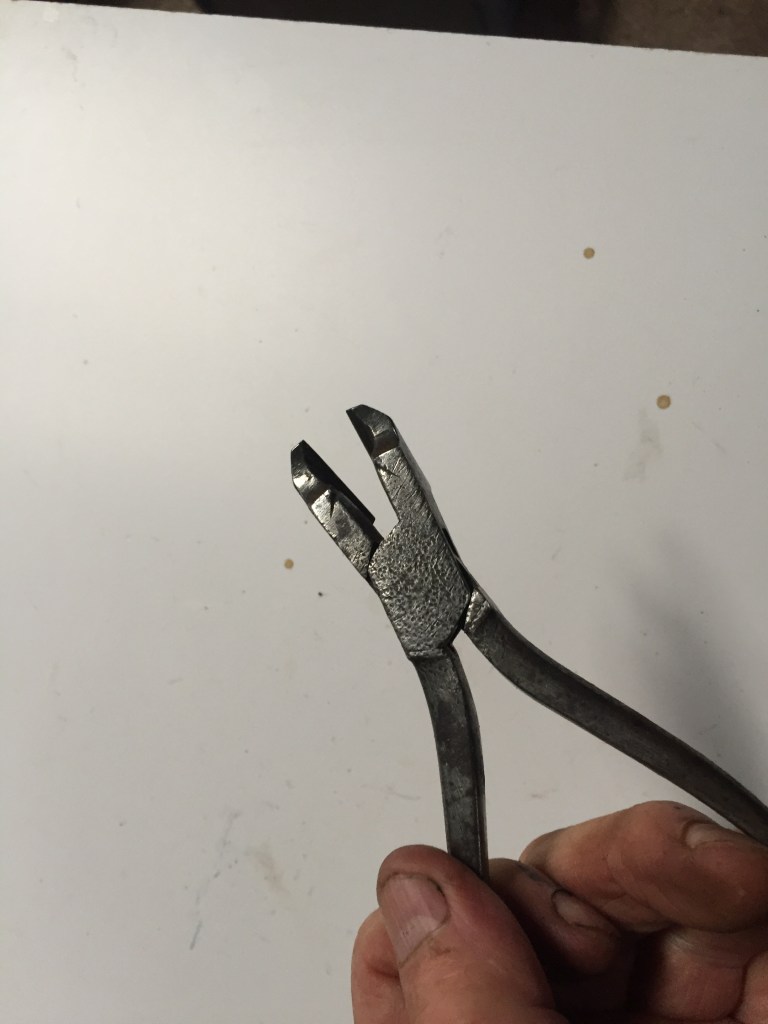
The scary part about pigs is that they retain some strong DNA urges from their wild past. In particular they have little fear or respect for any other ‘animal’ especially humans and even more especially, humans who want them to do things they don’t want to do. In particular they have a vicious pair of tusks which can be lethal.
To remove the threat of being incised the newly arrived porkers have their tusks snipped off using a small but very sharp steel clippers (opposite).
Another blast from their past is their desire for sex. They breed voraciously which of course is what the pig breeder wants. What is not wanted is a gang of testosterone fuelled adolescent porkers charger about the place ready to bite, rape and pillage. Hence a small operation is required within a few days of birth (the same applies to many other domestic animals) which basically involves emasculation ! To assist the handler a small metal and canvas holding frame was designed.
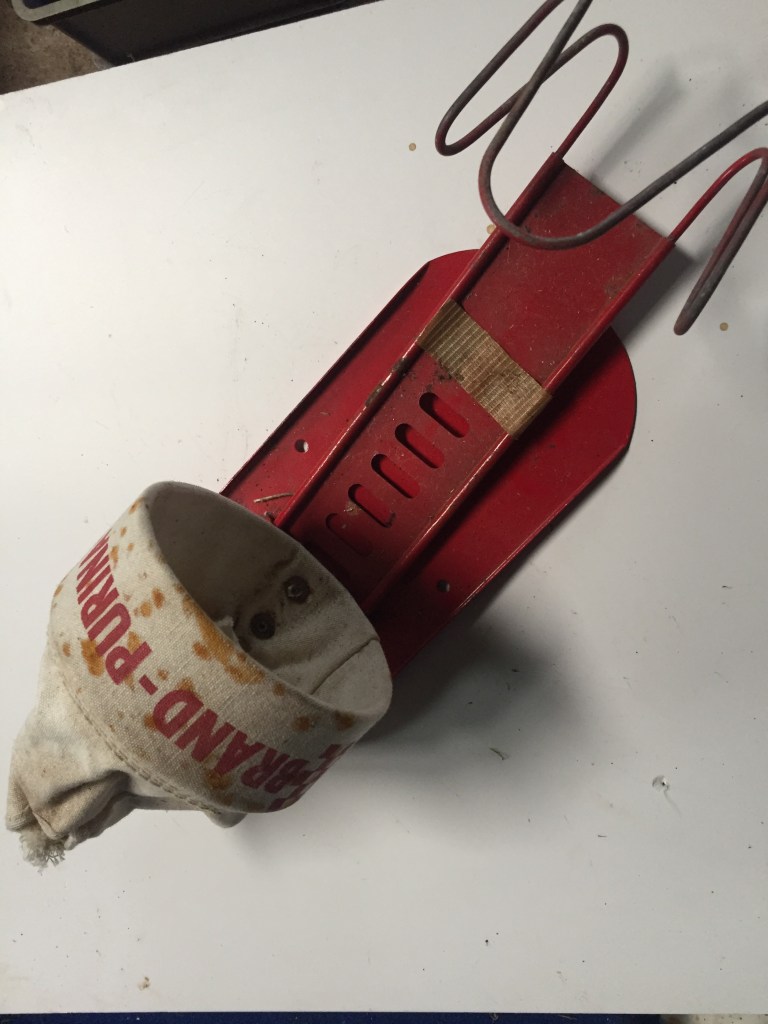
The porker is placed on his back with his head in the canvas bag, the snout well forward. The rear legs are put into the metal loops thus stopping any wriggling or other protesting. Apparently the covered head induced calm and quiet … until …
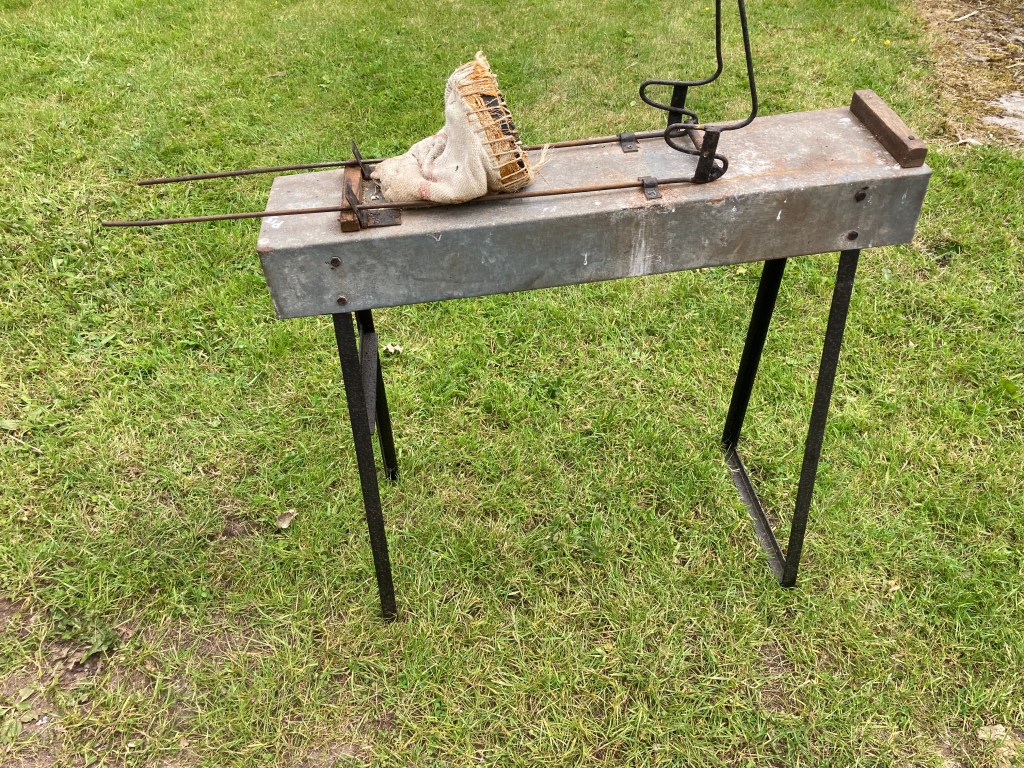
This home-made stand and frame was, so I thought, a uniquely clever invention by an enterprising farmer. Sometime later I came across the factory made example (new and never used) as shown above. I wonder if the ‘chicken or egg’ puzzle applies here !
Feel free to share your memories or thoughts in the comments. The ‘old ways’ have gone and it won’t be long before those that remember the antics associated with a backyard pig will be gone too.
 farmhistory.uk